
Should You Do No Contact? An Honest Guide for When You Are Not Sure
No contact is not right for every situation. When distance helps, when it gets complicated with kids or work, and how to decide what fits you.

Key takeaways
- You can want distance and still have good reasons contact is complicated.
- Less contact often helps when every interaction leaves you worse for a day.
- Kids, work, and shared friends need practical boundaries, not a perfect rule.
- No contact is not punishment, cruelty, or a trick to win someone back.
- Start with a little distance and adjust. You do not need a fixed number of days.
You probably already know the answer people expect. Go no contact. Block them. Do not look back.
And you probably also know why that feels incomplete. You share a lease, or a kid, or a desk on the same floor. You are not sure you want them gone forever. You just want to stop feeling like this after every conversation.
That tension is normal. This piece is not here to tell you what to do. It is here to help you think it through.
When No Contact Genuinely Helps
When contact keeps reopening the wound before it has had time to settle. After a breakup, your body can still react to your ex as if you are in the relationship. Each text, call, or run-in can reset that cycle. Research on how couples manage emotion together (Sbarra & Hazan, 2008) suggests that when you have relied on someone for calm for a long time, sudden contact after separation can feel like withdrawal. Distance gives that reaction fewer chances to fire.
When you feel worse after every interaction but keep having them anyway. If the pattern is contact, brief relief, then a crash that lasts a day or more, that is useful information. You do not need to judge yourself for going back. You can notice that the trade is not working and try less contact for a while.
When you are still hoping for reconciliation and it is stopping you from moving in any direction. Wanting them back is not shameful. Staying in loose contact while you wait for a sign often keeps you suspended: not fully in, not fully out. Distance does not guarantee you will stop hoping. It can give you enough quiet to see what you actually want, separate from what you are waiting for. If you are asking whether friendship could work instead, the Am I ready to be friends with my ex? quiz helps you check whether you are still attached.
For what no contact does and does not do in plain terms, no contact after a breakup goes into that without treating it as a rulebook.
When It Is More Complicated
Shared children. You have to be in contact. Aim for functional, boundaried communication: pickup times, school issues, health updates. Keep it brief and practical. Avoid rehashing the relationship in co-parenting threads. If every logistics text turns into an argument, that is a sign you need tighter limits on topic and timing, not that you failed at no contact.
Working together. Same principle. You cannot disappear from a shared project or office. What you can do is limit contact that is not work-related, skip the lunch that turns into a debrief about the breakup, and protect your evenings and weekends from work chat that is really about the two of you. A polite professional distance is still distance.
Shared friend groups. This one is harder. Full no contact may mean skipping every social event for months, which can feel like exile. Low contact is often more realistic: see mutual friends, but ask them not to report back on your ex. Do not sit next to your ex at every gathering if you know it will wreck the next day. You are allowed to pick which events you attend and how long you stay.

What It Is Not About
Punishing them or making a statement. Choosing less contact is about your recovery, not about teaching them a lesson. You do not need to announce it or perform indifference.
Being cruel or disappearing without communication when a real conversation was owed. If you owe a clear ending, a brief honest message can be kinder than vanishing. No contact is about what happens after that, not about avoiding common courtesy.
Getting them back by making yourself seem unavailable. That framing turns distance into a tactic. Research on self-directed choices (Deci & Ryan, 2000) suggests people tend to do better when their actions feel chosen for their own reasons, not calculated to change someone else. If your main goal is to trigger a response from them, you may still be organizing your week around their behaviour.
How to Decide
Ask yourself: does contact right now help me feel better or worse over 24 hours? Not in the five minutes after you send the text. The next day. If the answer is mostly worse, some distance is probably worth trying.
Be honest about proxy contact. If no contact still means checking their Instagram daily, rereading old messages, or asking a friend how they are doing, you may not be getting the break you think you are. The hit often comes from seeing them, not from which app you used. Keeping no contact when it feels impossible covers what to do when the urge to reach out hits hard.
You do not have to commit to a number of days. Just: less contact than now, for now. See how you feel after a week. Adjust. If you need a rough frame for how long people often try it, how long no contact should last lays out what tends to matter more than any counter.
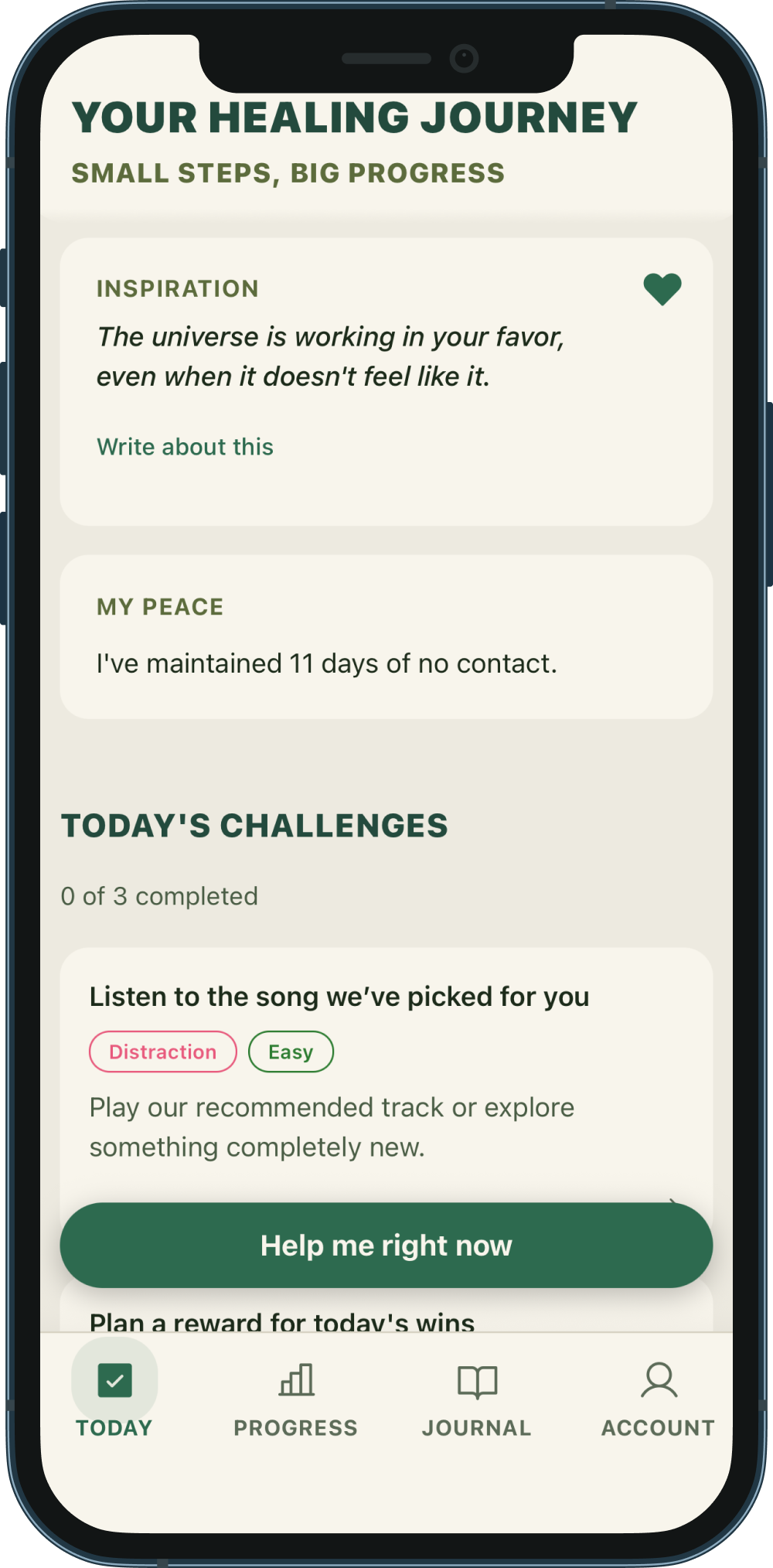
If you decide to try it, Breakup Reset makes it easy to track days without turning a slip into a shame spiral. One sentence of structure can be enough.
Breakup Reset
Free support for the week ahead
- Completely free
- Three challenges a day
- At your own pace
You Can Start Small and Change Your Mind
This is your decision. It does not have to be permanent or all-or-nothing. You can try a little distance, notice what shifts, and widen or narrow it from there.
Some people need full silence for a while. Some need low contact with strict boundaries. Some need to stay reachable for practical reasons and protect everything else. All of that can be valid.
Start with one step: mute their notifications, skip one event, or wait 24 hours before replying to a non-urgent message. See how you feel. You can always adjust.
For broader breakup advice that does not add pressure, breakup advice that does not make you feel worse stays closer to what actually helps.
Sbarra, D.A. & Hazan, C. (2008). Coregulation, dysregulation, self-regulation: An integrative analysis and empirical agenda for understanding adult attachment, separation, loss, and recovery. Perspectives on Psychological Science, 3(2), 141-167. / Deci, E.L. & Ryan, R.M. (2000). The “what” and “why” of goal pursuits: Human needs and the self-determination of behavior. Psychological Inquiry, 11(4), 227-268.
Frequently Asked Questions
Should everyone do no contact after a breakup?
No. For many people, less contact helps recovery. If you share children, a workplace, or a tight friend group, full no contact may not be realistic. The goal is usually less contact than you have now, with clearer boundaries where contact has to stay.
Is no contact just to get my ex back?
It can be used that way online, but that is not what the research supports. Distance helps most when you are doing it for your own recovery, not as a tactic to make someone miss you.
What if I cannot go fully no contact?
Functional contact is still contact. Keep messages brief and practical, limit chat that is not about logistics, and protect your off-hours. Low contact can work when zero contact cannot.