
Why Your Breakup Journal Shouldn't Live in the Cloud
Journaling helps process breakup grief, but writing your darkest thoughts requires absolute privacy. Learn why your breakup journal should stay off the cloud.

Key takeaways
- Writing your thoughts down forces your brain to organize them into linear sentences.
- Storing a journal in the cloud often makes you subconsciously edit your true feelings.
- You need absolute psychological safety to be honest about your anger and sadness.
- If a blank page feels overwhelming, start with small and specific writing prompts.
Every article on the internet will tell you to journal after a breakup.
They tell you to get your feelings out. They tell you to process your grief on the page. But there is a massive problem that most advice ignores.
Writing your most vulnerable thoughts feels unsafe if you think someone else might read them. You do not want your darkest moments sitting on a server. You do not want them syncing to a shared family tablet. Here is why true privacy is required for healing, and how to start writing today.
Why Writing Actually Works
After a breakup, your mind is a chaotic place.
You replay old conversations. You worry about the future. Your brain loops these thoughts continuously because it is trying to solve a problem. It thinks that if it stops reminding you about the breakup, you will be in danger.
Writing breaks this loop. You cannot write three thoughts at the exact same time. Writing forces your brain to take a messy web of emotions and organize it into a linear sentence. Once the thought is on the page, your brain can finally stop looping it. It knows the thought is securely stored outside of your head.
When the urge to reach out hits, writing the message somewhere private is often safer than sending it. What to do in the next 10 minutes if you want to text your ex covers that exact window.
The Problem With the Cloud
You open a notes app. You start typing about how angry you are. Then you suddenly stop.
You wonder if this app mines your data for targeted ads. You worry that your account is logged in on an old laptop. You start to delete the messy parts. You tone down your anger to sound more reasonable.
This is the privacy problem. If you do not feel completely secure, you will subconsciously edit yourself. You will write what you think you are supposed to feel, rather than what you actually feel.
You cannot heal if you are constantly filtering your grief. To be truly honest about your shame, anger, and sadness, you need a space that acts like a locked diary. You need absolute psychological safety.

How to Start When the Page Is Blank
Sometimes you have a safe space, but the blank page still feels too intimidating. You do not know where to begin.
Freestyle writing can be overwhelming. If you feel stuck, do not try to write a novel. Just answer one specific question. Here are three low-pressure prompts to help you start.
Prompt 1: What Is One Thing I Do Not Miss?
When you are grieving, your brain only remembers the good times. Force it to remember reality. Write down one habit, argument, or trait that you are relieved you no longer have to deal with.
Prompt 2: What Is the Hardest Part About Today?
Do not write about the whole relationship. Just focus on the next 24 hours. Are you dreading a lonely dinner? Are you struggling to focus at work? Name the exact obstacle you are facing right now.
Prompt 3: What Would I Say to a Friend in My Exact Position?
We are incredibly cruel to ourselves after a breakup. We judge our own sadness. Imagine your best friend is going through this exact same situation. Write down the advice and comfort you would give to them.
A Safe Place for Your Thoughts
You need a space that supports your healing without harvesting your data.
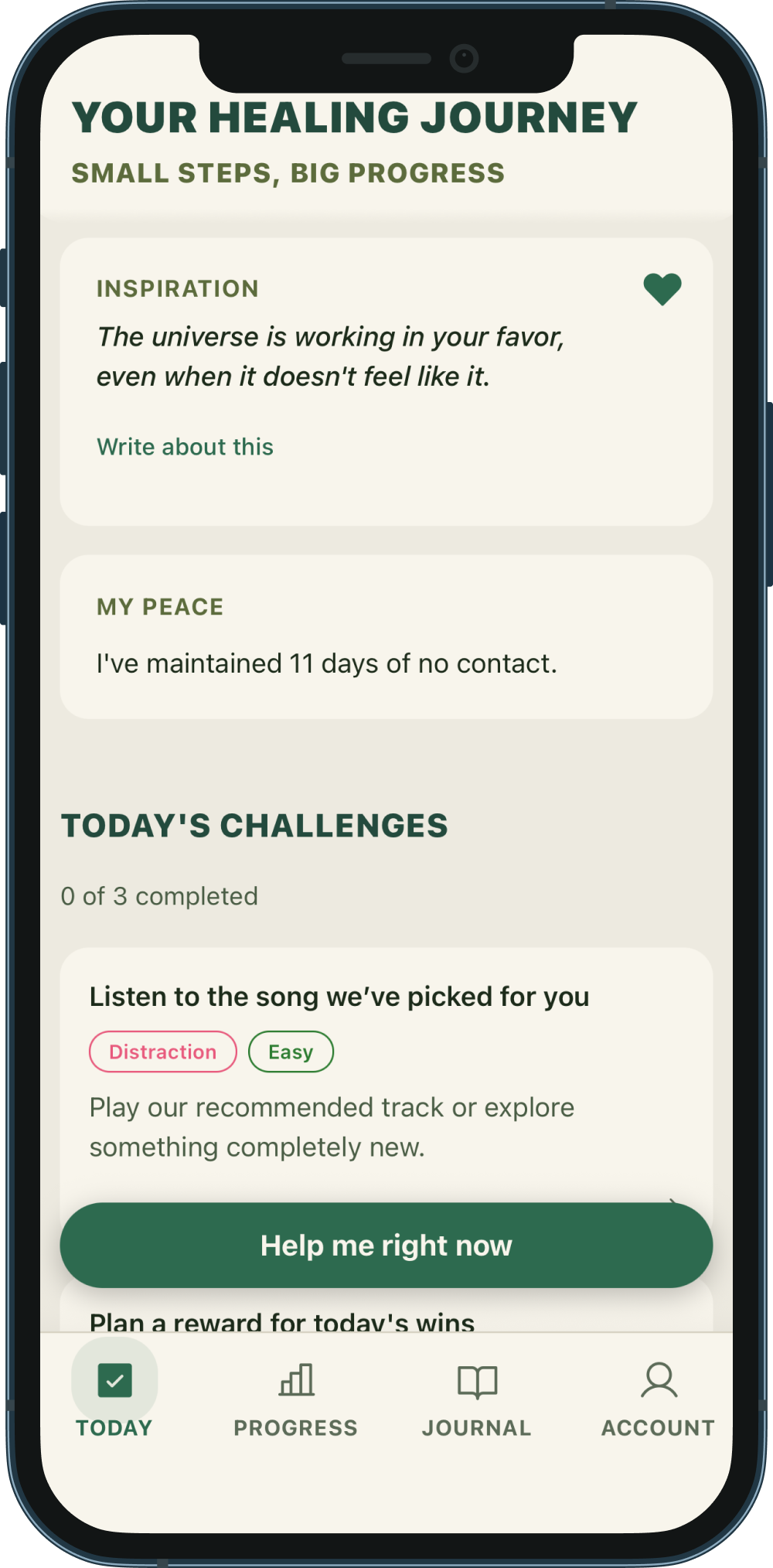
Breakup Reset includes a private journal built for this reason. The core promise is simple: your entries are stored on your own device. They are not uploaded to a cloud. They are not read by an algorithm.
The app offers gentle daily prompts matched to your coping style if you feel stuck, and a blank page if you just need to vent. You can write exactly what you feel, knowing it belongs only to you. For more on how the journal and other tools fit together, see the Breakup Reset app.
Writing can help. So can keeping it private.
If you need something steadier for the first week, see what to do after a breakup. If the thoughts will not quiet down, how to cope when you cannot stop thinking about them has more on interrupting the loop.
Breakup Reset
Free support for the week ahead
- Completely free
- Three challenges a day
- At your own pace
Frequently Asked Questions
Do I need to write every single day?
No. Journaling should never feel like a chore. Write when your head feels too loud, or when you need to interrupt a panic cycle. If you go three days without writing, that is completely fine.
Should I re-read my old journal entries?
Early in a breakup, re-reading old entries can pull you backward and trigger old anxieties. Treat your journal as a release valve: let the thoughts out, close it, and move forward. You can reflect on them months later when you feel more stable.
What if I only write negative things?
That is exactly what a breakup journal is for. It is a safe container for negative emotions. You do not need to force positivity onto the page. Let the journal hold the heavy feelings so you do not have to carry them all day.