
Breakup Anxiety at Night: What to Do When Your Mind Won't Stop at 3am
Nighttime anxiety after a breakup hits differently than daytime grief. Here is why it happens and what actually helps when the thoughts won't stop at 3am.
Key takeaways
- Nighttime is genuinely harder: stimulation drops, the attachment system activates, and the urge to reach out peaks.
- The spiral feels like processing but is usually activation: the mind running the same loop hoping to find an answer it will not find.
- Breathe first, decide second: the extended exhale activates the calming response before anything else can.
- Writing one thought down removes it from active rotation without requiring you to solve it.
- Planning the evening ahead of time is more effective than willpower when the spike hits.
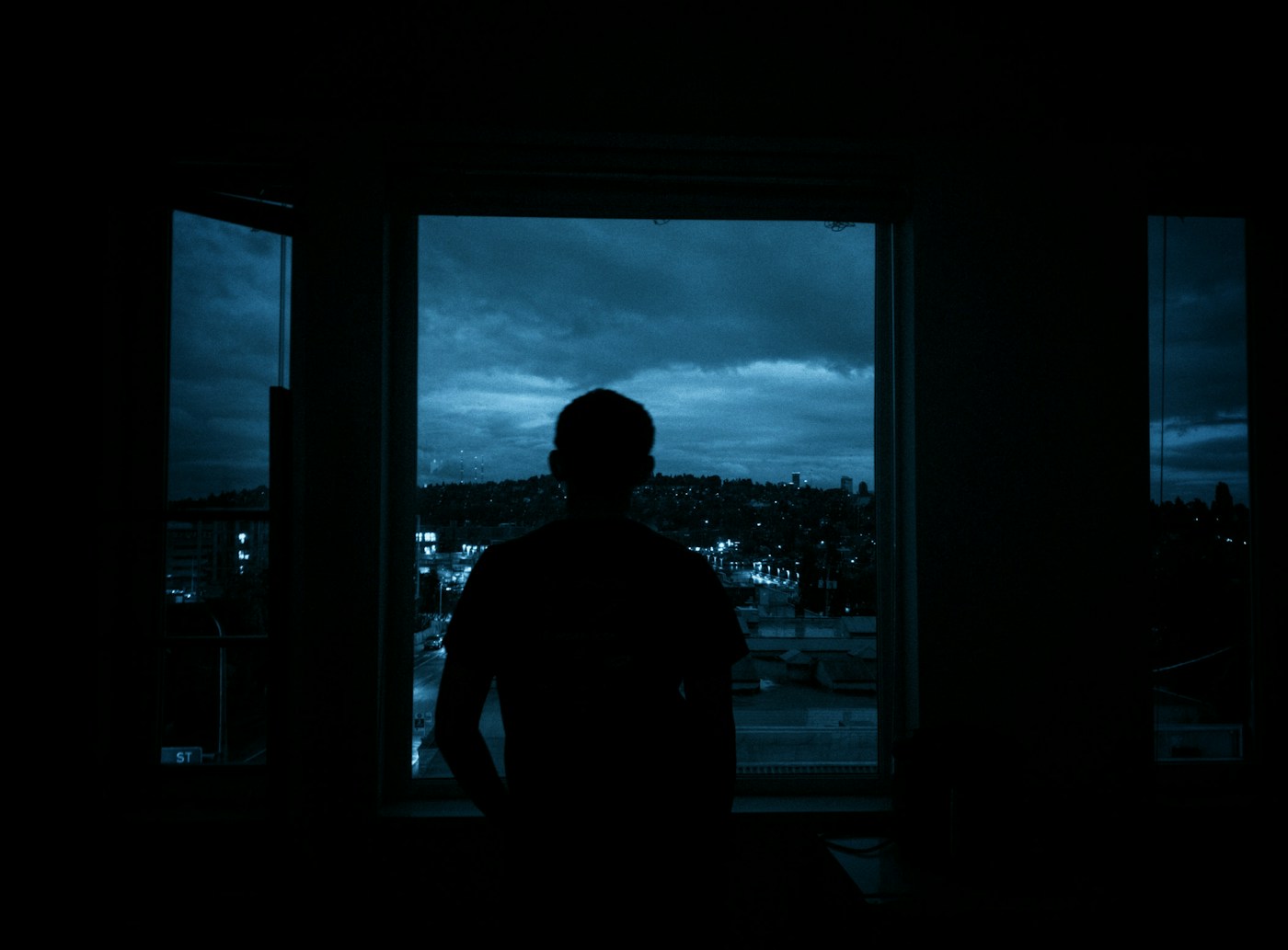
It is late. The day was manageable. You worked, you got through it, you had stretches where you were not thinking about it. And then something small happened, or nothing happened at all, and now you are wide awake and the thoughts are running.
The replays. The what-ifs. The urge to send a message you have already talked yourself out of twice. The feeling that something needs to happen right now, except there is nothing to do.
You are not losing it. This is a specific feature of breakup grief that almost no one warns you about.
Why Nighttime Is Harder
During the day there is structure: tasks, other people, movement, things that require your attention. That structure does not suppress what you are going through. It just occupies enough of your nervous system that the loss is not the loudest thing in the room.
At night, that structure falls away. Stimulation drops. There is nothing demanding your attention. The attachment system, which has been running quieter while you were occupied, has space to surface. The urge to reach out peaks at night for most people going through a significant breakup. The replaying starts. Small anxieties that were manageable at 2pm feel much larger at 2am.
There is also this: the body is meant to be winding down at night, cortisol dropping, the calming system taking over. But grief keeps the threat response elevated, so sleep entry is harder, and waking in the night is common. The body is trying to do two things at once. That is not a sign something is wrong with you. It is just how grief behaves in the dark.
What a Spiral Is and Why It Keeps Going
The mind in a spiral at 3am is trying to solve something. It is running the same thoughts in case this time it finds the answer, the explanation, the version of events that makes it make sense. It rarely does. But the loop feels productive, like work, like processing, which is why it is so hard to stop.
What is actually happening is activation, not resolution. The loop generates arousal. The arousal makes the thoughts feel more urgent. The urgency keeps the loop running.
There is also this: thoughts at night feel more true and more final than they are. Something about low stimulation makes the worst conclusions feel certain. Between midnight and 4am the mind is not a reliable narrator. Morning does not always fix everything, but it does reliably change the weight of the thoughts from the night before.

What Actually Helps in the Moment
Breathe first, decide second. Before you do anything else, before you pick up the phone, before you think about whether to send the message, before you decide whether this is fixable, do three rounds of 4-1-5 breathing. Four seconds in, one second hold, five seconds out. The extended exhale activates the calming part of the autonomic nervous system faster than anything you can do with your thoughts. The spike will be smaller after three rounds. Then decide.
Write one thought down. Not a journal entry. Not processing. One line. The thing that is loudest right now, on paper or a note on your phone. Getting a thought out of active rotation by externalizing it removes it from the loop briefly. Then close the note.
Change something physical. Get a glass of water. Move to a different room for a few minutes. Lie on the floor. Change of physical situation provides a small pattern interrupt to what the nervous system is doing. It does not need to be dramatic.
Use your phone for something low-stimulus. The phone is fine. Reaching out to your ex is not, at 3am. Checking their profiles is not. But putting on a podcast you have heard before, something familiar, not engaging enough to keep you awake, or ambient sound is fine. The goal is to give the mind something low-demand to rest on.
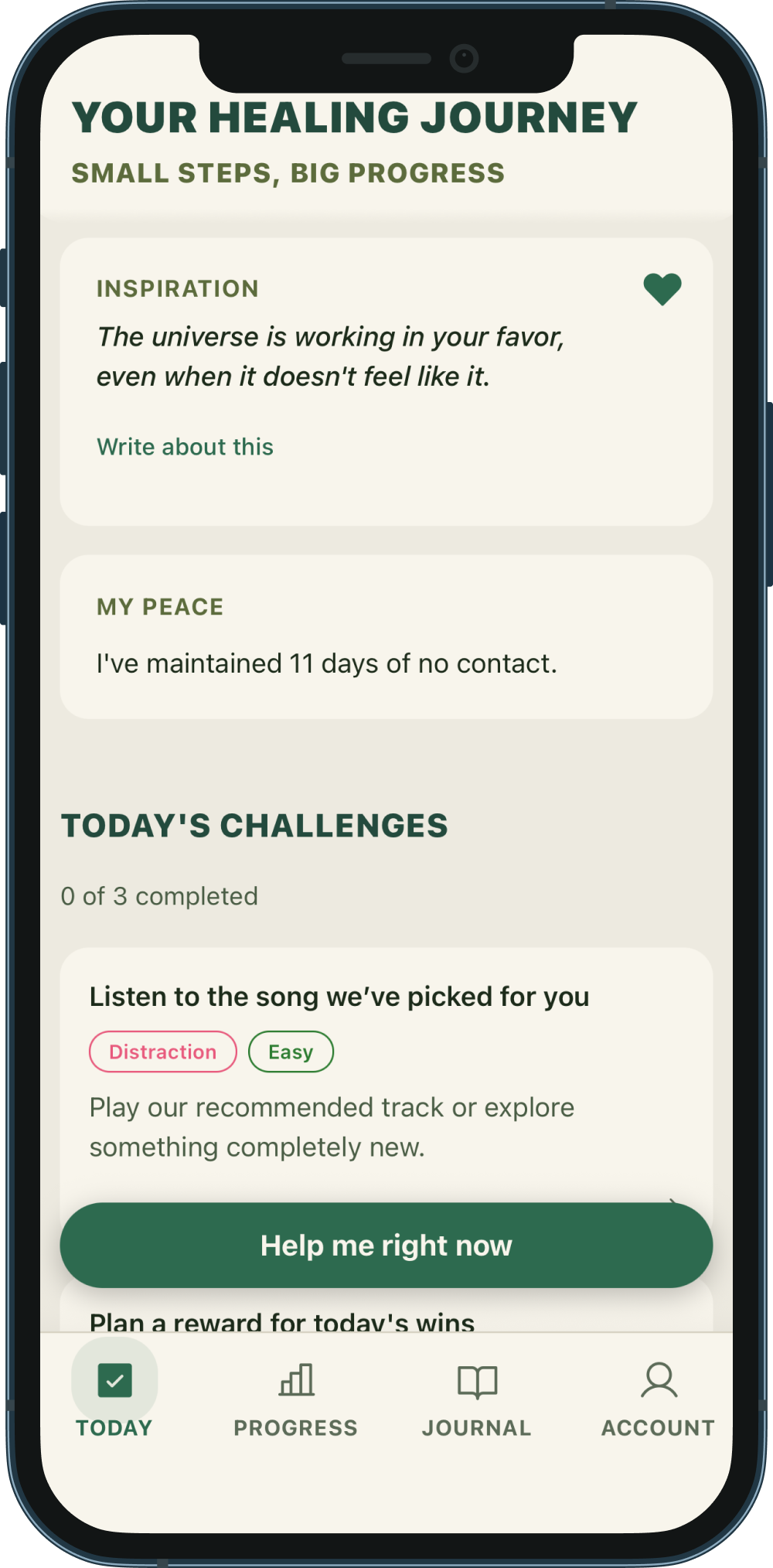
Breakup Reset’s “Help me right now” has breathing, a quick journal moment, and distraction options: the distraction category specifically gives you something concrete to do that has nothing to do with your ex. It is not a fix for the night. It is something to do for the next twenty minutes.
Breakup Reset
Free support for the week ahead
- Completely free
- Three challenges a day
- At your own pace
If It Happens Regularly
One bad night after a breakup is almost universal. Recurring nights of significant anxiety for several weeks, or sleep disruption affecting your daily functioning, is worth mentioning to a doctor. Breakup grief and anxiety often overlap, and both are treatable. You do not need to be in crisis to ask for support: just consistent enough that it is affecting your life.
Planning the Evening As Prevention
The nights that end in spirals often start with no plan. An unstructured evening with nothing to do but exist in the absence of the person is the exact conditions that produce a 3am spike.
One anchoring plan for the evening, a walk, a show you want to finish, a call with a friend at a specific time, anything that gives the next two hours a shape, lowers the probability of the free-fall into unstructured time where anxiety grows. This is not control. It is a small reduction in the blank space that anxiety fills.
The plan does not need to be good. It does not need to be enjoyable. It just needs to exist.
Tonight’s Goal Is Not to Feel Fine
Nights after a breakup are genuinely harder than days. That is not you being dramatic. It is a predictable, documented feature of grief that almost nobody warns you about.
The goal tonight is not to feel fine. It is to get through it, to not send the message, to not make the call, to arrive at the morning having done nothing that makes the next week harder.
Tomorrow starts over. The thoughts will weigh less.
If the loops hit during the day too, see how to cope when you cannot stop thinking about them. If the urge to reach out is what wakes you, keeping no contact has practical next steps.
Fisher, H.E., Brown, L.L., Aron, A., Strong, G. & Mashek, D. (2010). Reward, addiction, and emotion regulation systems associated with rejection in love. Journal of Neurophysiology, 104(1), 51–60. / Sbarra, D.A. & Hazan, C. (2008). Coregulation, dysregulation, self-regulation. Perspectives on Psychological Science, 3(2), 141–167. / Borkovec, T.D. (1979). Pseudo (experiential) insomnia and idiopathic (objective) insomnia: Theoretical and therapeutic issues. Advances in Behaviour Research and Therapy, 2(1), 27–55. (foundational worry research; cited as background for nighttime rumination amplification, not a breakup-specific study.)
Frequently Asked Questions
Why is breakup anxiety worse at night than during the day?
During the day, activity and structure provide distraction and absorb some of the nervous system's load. At night, stimulation drops and there is nothing to fill the space with. The attachment system, which has been quieter during the day, activates. The urge to reach out peaks at night for most people going through a significant breakup. This is a predictable feature of grief, not a sign something is particularly wrong.
What is the 4-1-5 breathing technique for anxiety?
Breathe in for four counts, hold for one count, breathe out for five counts. The extended exhale activates the parasympathetic nervous system (the calming part of the autonomic system), which is why breathing with a longer out-breath than in-breath has a measurable calming effect on heart rate and arousal. Three to five rounds is usually enough to take the edge off a spike. Do it before you decide anything else.
Is it okay to pick up my phone when I cannot sleep after a breakup?
The phone is not the problem. What you use it for matters. Reaching out to your ex, checking their profiles, or opening apps that will activate the anxiety loop will make things worse. Using it for something low-stimulus, a podcast you have heard before, ambient sound, something you find genuinely calming, is fine. The distinction is: phone as tool versus phone as activation.