
How to Do 'Low Contact' When You Can't Do 'No Contact'
Sharing a child, a dog, or a workplace with your ex? Learn how to navigate low contact, set functional boundaries, and manage the anxiety of forced interactions.

Key takeaways
- Low contact means cutting off emotional access while keeping functional access.
- Treat communication with your ex like a transaction with a distant colleague.
- Keep messages brief, neutral, and strictly about the required topic.
- Expect a physical anxiety spike when you see their name, and have a plan to settle before you reply.
People always tell you to just block your ex and move on.
That advice is useless when you share a child, a dog, or a desk at work. You feel left out of the standard breakup recovery conversation. You cannot simply disappear. You still have to interact with the person who broke your heart.
Seeing their name on your screen is exhausting. But you can protect your peace without walking away from your responsibilities. You just need to switch to low contact.
Redefining the Goal
Low contact is different from no contact.
With no contact, the goal is silence. With low contact, the goal is boundary management. You eliminate emotional access while maintaining functional access.
You are no longer their confidant. You do not ask how their day went. You do not comfort them when they are stressed. You only discuss the kids, the house, or the project at hand. The romantic relationship is over. A practical relationship has to take its place.
If you are still sorting whether silence or structured contact fits your situation, should you do no contact walks through the honest tradeoffs.
The Business Protocol
To survive low contact, treat your ex like a distant coworker. You need clear rules for how and when you communicate.
Keep It Brief and Neutral
Only share facts. Do not add emotional commentary. If you are arranging a custody drop-off, state the time and location. You do not need a long story about why you are five minutes late. “Running five minutes late” is enough.
Change the Channel
Texting feels intimate. If a text ruins your morning, move conversations to email. Email creates mental distance. It feels formal. It also gives you time to pause before you hit send. If you are co-parenting, use a dedicated family calendar app instead of texting.
Do Not Take the Bait
Your ex might try to start an emotional argument. They might bring up the past. They might send a nostalgic text late at night. You do not have to respond to anything outside your functional duties. Silence is a valid response to an emotional trap.
For people stuck in the same home, how to survive a breakup when you still live together covers creating distance inside a shared space.

Managing the Physical Aftermath
Even a simple email about a work project can make your heart race. Your hands might shake. Your chest gets tight. That reaction is normal. Your body is treating the contact as a threat.
The goal is not to prevent the spike. The goal is to manage it so you do not reply from anger or panic. Come back to baseline before you type.
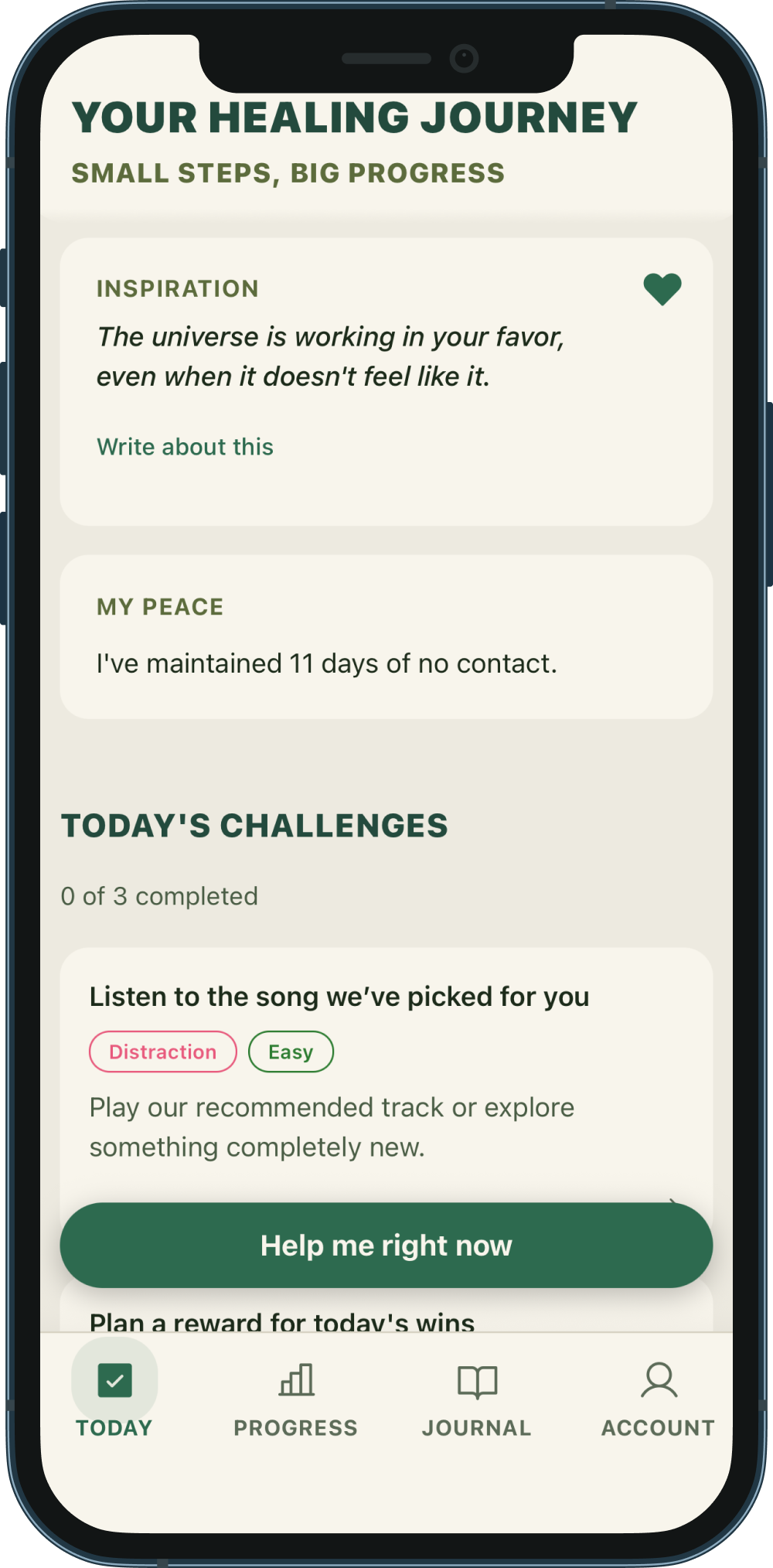
When their name pops up and adrenaline spikes, you need an immediate anchor. A few rounds of 4-1-5 breathing, inhale for four, hold for one, out for five, can take the edge off in real time. Then send the short, boundaried reply. If a little structure helps in those moments, Breakup Reset has a support hub built for exactly that kind of spike, plus a private on-device journal for what you cannot say to them.
If you want the basics of distance first, start with no contact after a breakup. If you are still deciding whether full silence fits, should you do no contact walks through the honest tradeoffs.
Breakup Reset
Free support for the week ahead
- Completely free
- Three challenges a day
- At your own pace
Frequently Asked Questions
Can we still talk about our day to be polite?
No. Politeness does not require emotional check-ins. Asking about their day blurs your new boundary. You can say hello and thank you without asking personal questions.
What if they accuse me of being cold?
They probably will. Setting a boundary often makes the other person uncomfortable. Being professional is not the same as being cold. You are protecting your energy. Their reaction to your boundary is not yours to fix.
How long do I have to do this?
Keep this business protocol until forced interactions no longer cause a physical anxiety spike. For co-parents, that may be the long-term pattern. Over time the anxiety usually fades, and the interactions become boring. Boring is what you want.